

Summary
Complementary User Entity Controls (CUECs) represent one of the most frequently misunderstood—and often overlooked—components of a SOC 2 report. While service organizations identify the controls their customers are expected to implement, many organizations fail to establish the governance, ownership, documentation, monitoring, and testing processes necessary to ensure those responsibilities are effectively managed. The result can be control gaps, audit findings, increased operational risk, weakened customer assurance, and regulatory concern.
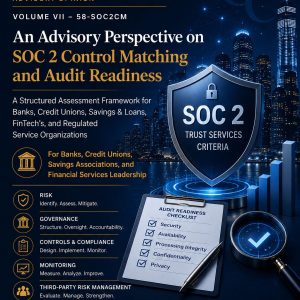
This executive advisory publication provides a comprehensive examination of CUECs from a governance, operational, risk management, and audit perspective. Rather than viewing CUECs solely as customer responsibilities listed within a SOC report, the publication demonstrates how they should be integrated into an organization’s internal control framework through clearly defined ownership, enterprise risk assessment, control mapping, evidence management, testing, continuous monitoring, executive reporting, and remediation processes.
Written for executive leadership, internal audit, compliance professionals, vendor management organizations, technology leadership, operational risk teams, and organizations relying on third-party service providers, this publication provides practical guidance for transforming CUECs into an active governance discipline rather than a passive compliance requirement. Throughout the publication, readers will find implementation guidance, practical mapping examples, testing methodologies, evidence recommendations, management considerations, and advisory perspectives designed to simplify one of the most technically challenging aspects of SOC 2.
Topics include understanding CUECs, governance structures, ownership responsibilities, enterprise control mapping, operational integration, documentation standards, evidence collection, testing and validation methodologies, executive oversight, monitoring and reporting, deficiency management, remediation planning, third-party dependencies, fourth-party considerations, and long-term governance strategies.
For organizations seeking to strengthen their SOC 2 control environment, improve audit readiness, enhance customer confidence, and establish sustainable governance over customer responsibilities, this publication provides both the strategic perspective and practical implementation guidance needed to build a mature and defensible CUEC management program.
Table of Contents
- Executive Summary
- Understanding SOC 2 in Financial Services
- Understanding Complementary User Entity Controls (CUECs)
- Why CUECs Fail in Financial Institutions
- The Operational Governance Problem
- AI, Cloud Dependency & CUEC Expansion
- SOC 2 Operational Governance Framework
- CUEC Management and Oversight
- CUEC Risk Classification Model
- Operational Risk Analysis
- Cybersecurity Risk Analysis
- Third-Party Vendor Risk Analysis
- Managing AI Responsibilities within the Control Environment
- CUEC Control Mapping Framework
- CUEC Testing Methodology
- Internal Audit Work Program/Common Internal Audit and Regulatory Review Procedures
- Vendor Risk Management Integration and Alternative Assurance Approaches
- Board Reporting and Regulatory Readiness
- Recommended Board and Executive Reporting Table of Contents
- Advisory Conclusion
- References
- Appendix A – Governance
- Appendix B – Shared Responsibility Model
Price $725.00
Pages: 72




Reviews
There are no reviews yet.